On this page
Key takeaways
- Use coworking spaces for calls, long sessions, community, and routine. Use cafes for lighter work, writing, admin, and short blocks.
- Impact Hub, Utopicus, Talent Garden, and similar spaces solve the serious-work problem; cafes solve the I-need-to-leave-my-flat problem.
- Laptop-friendly does not mean rent-free office. Buy properly, avoid lunch rush, and do not take calls in tiny cafes unless the place clearly supports it.
- Choose your work spot by task, not vibe: deep work, calls, meetings, social contact, or a two-hour change of scenery.
Remote work in Madrid sounds easy until you actually do it.
At first, the fantasy is strong: laptop, cortado, sun on the table, a little plaza, you typing something important while Madrid hums approvingly around you. Then reality arrives with no outlet, wobbly Wi-Fi, a waiter giving your charger the look normally reserved for tax fraud, and a toddler behind you conducting acoustic research with a spoon.
Madrid is a good remote-work city. But you need to match the place to the work. Coworking, cafes, libraries, hotel lobbies, and bars all solve different problems. Use the wrong one and you become either unproductive, broke, or That Laptop Person. Nobody wants to be That Laptop Person.
The First Rule: Choose By Task, Not Vibe
Before picking a place, ask what kind of work you are doing.
Deep focus needs quiet, a real chair, power, and no social theatre. Calls need privacy and reliable internet. Admin can happen almost anywhere. Writing can survive a bit of cafe noise. Client meetings need professionalism. A two-hour "please get me out of my flat before I start arguing with the furniture" session needs coffee and daylight.
Madrid gives you options. The trick is not confusing them.
Coworking Spaces: For Serious Work And Human Contact
Coworking is the grown-up answer when your work needs structure. It costs more than a cafe, obviously, but it gives you what cafes cannot reliably offer: proper desks, outlets, meeting rooms, phone booths, community, stable Wi-Fi, and the moral peace of not occupying a four-person table with one espresso and a spreadsheet.
Impact Hub Madrid is one of the strongest all-round options for freelancers, entrepreneurs, consultants, and people who want community rather than just a desk. It has several Madrid locations, including Alameda near Atocha, Piamonte in Chueca, Barceló near Tribunal, and Prosperidad. Impact Hub lists hot desk, dedicated desk, day pass, and membership-style options; its day-pass route is useful if you do not want to commit immediately.
Utopicus is more polished and corporate-feeling, with several Madrid locations including Castellana, José Abascal, Príncipe de Vergara, Francisco Silvela, Méndez Álvaro, and Paseo de la Habana. It suits people who want a professional setting, offices, meeting rooms, and a cleaner business rhythm. If Impact Hub is community and ecosystem, Utopicus is flexible office with better shoes.
Talent Garden Madrid in Arganzuela is aimed at innovation, tech, digital, and creative work. Its campus is large, with flexible workspaces, meeting rooms, private offices, events, and a terrace. It is a good fit if your work orbit includes startups, product, design, marketing, or the broader "I promise this deck will become a company" economy.
There are also neighborhood coworking spaces across Chamberi, Malasana, Salamanca, Retiro, Arganzuela, and Chamartin. These can be better than big networks if you only need somewhere close to home. The best coworking space is often the one you will actually use on a rainy Tuesday.
When Coworking Is Worth Paying For
Pay for coworking if you take calls, need a routine, work full days outside home, want professional meeting rooms, or are new in Madrid and need human contact that is not just the person at the supermarket asking whether you want a bag.
Coworking is especially useful in summer. Madrid flats can become ovens with Wi-Fi. If your apartment has weak AC, interior darkness, or a desk wedged between the bed and a drying rack, a coworking membership can be cheaper than slowly losing your mind.
Start with day passes or a 10-day bundle if available. Do not commit to a monthly membership until you have tested the commute, chairs, noise level, call booths, lunch options, and whether the place feels energizing or just expensive.
Laptop-Friendly Cafes: Good For Short Blocks
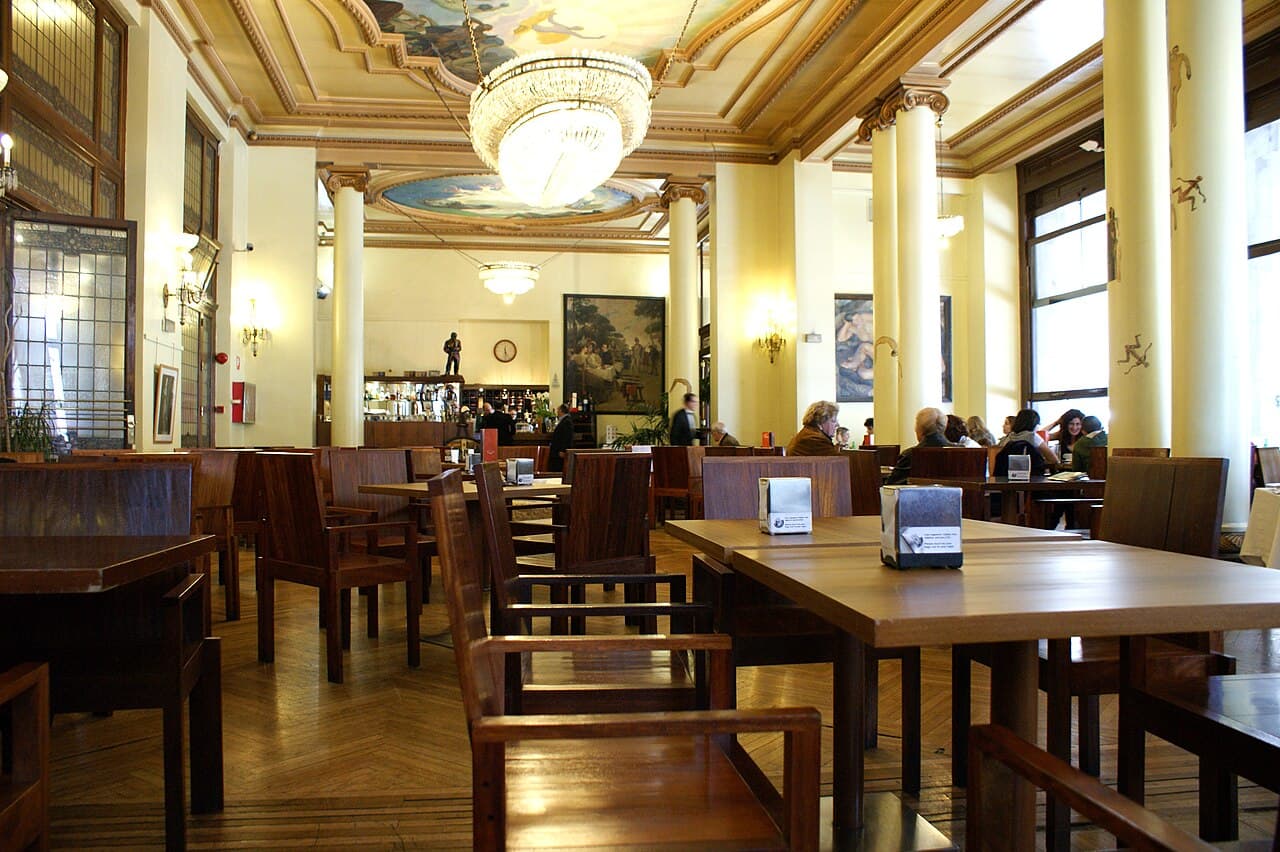
Cafes are best for lighter work: writing, email, research, planning, admin, reading, and short creative blocks. They are not ideal for three hours of calls, giant monitors, or behaving like the cafe owes you a benefits package.
Madrid has a growing remote-work cafe culture, and directories such as Geronimo and CasiLocal track laptop-friendly spots by Wi-Fi, outlets, noise, and seating. Geronimo's current Madrid list highlights places such as Plenti near Retiro, Mision Cafe in Centro, HanSo Cafe in Malasana, and Cafe del Art in La Latina. CasiLocal also curates Madrid spots with attention to power, acoustics, and neighborhood.
Use those directories as starting points, not holy scripture. Cafe policies change. A place that welcomes laptops on Tuesday morning may reasonably hate them during Saturday brunch. Madrid cafes are living businesses, not open-plan offices with better pastries.
Cafe Etiquette, Because Someone Has To Say It
If you work from a cafe, buy properly. One coffee does not rent a table for four hours. Order food or a second drink if you stay. Avoid peak lunch and brunch hours unless the place clearly supports laptop work. Do not take loud calls in small rooms. Do not monopolize the only outlet like you discovered electricity personally.
If staff ask you to move or limit laptop use, do not debate them like you are defending constitutional rights. Say thanks, pay, leave, and come back another day as a normal customer. Madrid's cafe scene is too good to poison with laptop entitlement.
The simple rule: if your work setup would annoy you as a paying diner at the next table, it is probably annoying.
Bars Can Work, But Pick The Right Hour
Some Madrid bars are excellent for laptop time in the dead zone between breakfast and lunch or late afternoon before the evening rush. This is not true everywhere. A traditional bar with a zinc counter, a loud TV, and three regulars discussing football at prosecutorial volume is not failing you. It is being a bar.
Bars work best for admin, reading, and quick tasks. They are rarely good for calls. They are excellent for reminding you that work is not the only reason to be alive, which remote workers occasionally need delivered in vermut form.
Libraries And Cultural Centers
Libraries are underrated if you need silence and do not need calls. Madrid has public libraries and cultural centers with study areas, though access, hours, and crowding vary. They are better for deep reading, writing, and exam-style focus than for calls or collaborative work.
The tradeoff is atmosphere. Libraries give you silence, not cafe charm. This is good. Charm is often just noise with better lighting.
Hotel Lobbies And Hybrid Spaces
Some hotels, bank work cafes, and hybrid lobby-cafe spaces can be useful for a polished hour between meetings. They are not always cheap, and the etiquette varies, but they can be good for professionals who need a central, reliable place without committing to a coworking day.
The Santander Work Cafe model is worth knowing: it combines banking, cafe, and work areas in several Spanish locations, with Madrid openings including Cea Bermudez. It can be useful for occasional laptop sessions, though availability and rules vary by branch.
Best Neighborhoods For Remote-Work Infrastructure
Chamberi is one of the best practical bases: cafes, calmer streets, strong services, and good transport without full tourist overload. It is especially good if you want weekday routine.
Malasana and Chueca have plenty of cafes and social energy, but noise tolerance matters. Great for a two-hour creative session, less great if every call needs silence.
Retiro and Ibiza work well if you want calmer cafe sessions and park breaks. The area is not as dense with laptop spots as Centro, but the rhythm is better for focus.
Arganzuela and Legazpi are increasingly interesting because of Matadero, Madrid Rio, Talent Garden, and practical rents. Good for people who want space and routine rather than the central-cafe carousel.
Salamanca and Castellana are better for corporate coworking, meetings, and polished workspaces than for scruffy laptop cafe wandering.
The Home-Office Check
Even if you plan to use coworking and cafes, your flat still matters. Before signing a lease, check fiber availability, desk space, daylight, heat, AC, noise, interior patios, and whether the room you plan to work from is usable in August.
Madrid summer is not a productivity methodology. If your flat traps heat and your only desk faces a wall six inches away, you will pay for coworking eventually. Better to know that before choosing the apartment.
The Madrid Dispatch Setup
For most remote workers, the best setup is mixed:
- Home for calls and early starts.
- Coworking one to three days a week for structure.
- Laptop-friendly cafes for two-hour creative or admin sessions.
- Libraries for silence.
- Bars for light work when the day is already sliding toward vermut.
Do not build your Madrid work life around one perfect place. Build a small rotation. One serious workspace, one local cafe, one quiet backup, one central meeting spot, and one place where you go when your flat starts looking at you funny.
Madrid is good for remote work when you treat the city as a toolbox, not as one endless cafe table.
Main tradeoffs
- Coworking costs money but gives structure, calls, chairs, outlets, and fewer ethical questions about nursing one coffee for half a workday.
- Cafes are cheaper and more Madrid, but Wi-Fi, power, seating, and tolerance vary wildly.
- Home is convenient until your flat becomes your office, cafeteria, phone booth, and low-grade existential chamber.
Sources
- Coworking in Madrid / Impact Hub Madrid
- Office rental and coworking in Madrid / Utopicus
- Talent Garden Madrid / Talent Garden
- Best Cafes to Work From in Madrid / Geronimo — Unavailable during the 2026-10-18 access check (HTTP 402); this is an access result, not a factual verdict.
- The Directory for Remote Work in Madrid / CasiLocal
Spotted an outdated detail? Send the desk a correction.