Quick snapshot
Use Sol as an orientation base, not as the default long-term answer unless you knowingly accept the crowds and noise.
- Rent
- €€€€
- Typical rent
- €1,500–€2,700+
- Noise
- High
- Safety (editorial)
- Medium
- Green space
- Low
Rent & Cost of Living
Typical asking rent range: €1,500–€2,700+, varies by size, condition, and contract type. This edition's indicative per-square-metre estimate is around €26/m² in Sol-Centro.
Rent ranges are dated editorial planning estimates, not current market quotations. Compare live listings and the exact flat. Atmosphere and safety ratings are editorial judgments, not statistical crime rankings.
A bit of history
Puerta del Sol takes its name from a gate in the old medieval city wall that was decorated with an image of the sun — a gate demolished in the 16th century, long before the current semicircular plaza took its modern form. The square has functioned as Madrid's civic and commercial centre for centuries: it was the site of the first tramlines, the first electric lighting in the city, and the kilometre-zero marker from which Spain's national road distances are still officially measured. The stone tablet marking that point is set into the pavement in front of the Real Casa de Correos, the building that now houses the regional government and is best known as the backdrop for the New Year's Eve grape-eating tradition broadcast nationally every 31 December. Sol has also been the recurring site of political moments — demonstrations, celebrations, and the 15-M indignados movement that occupied the square in 2011 and became a reference point for European protest movements of the decade.
The Vibe
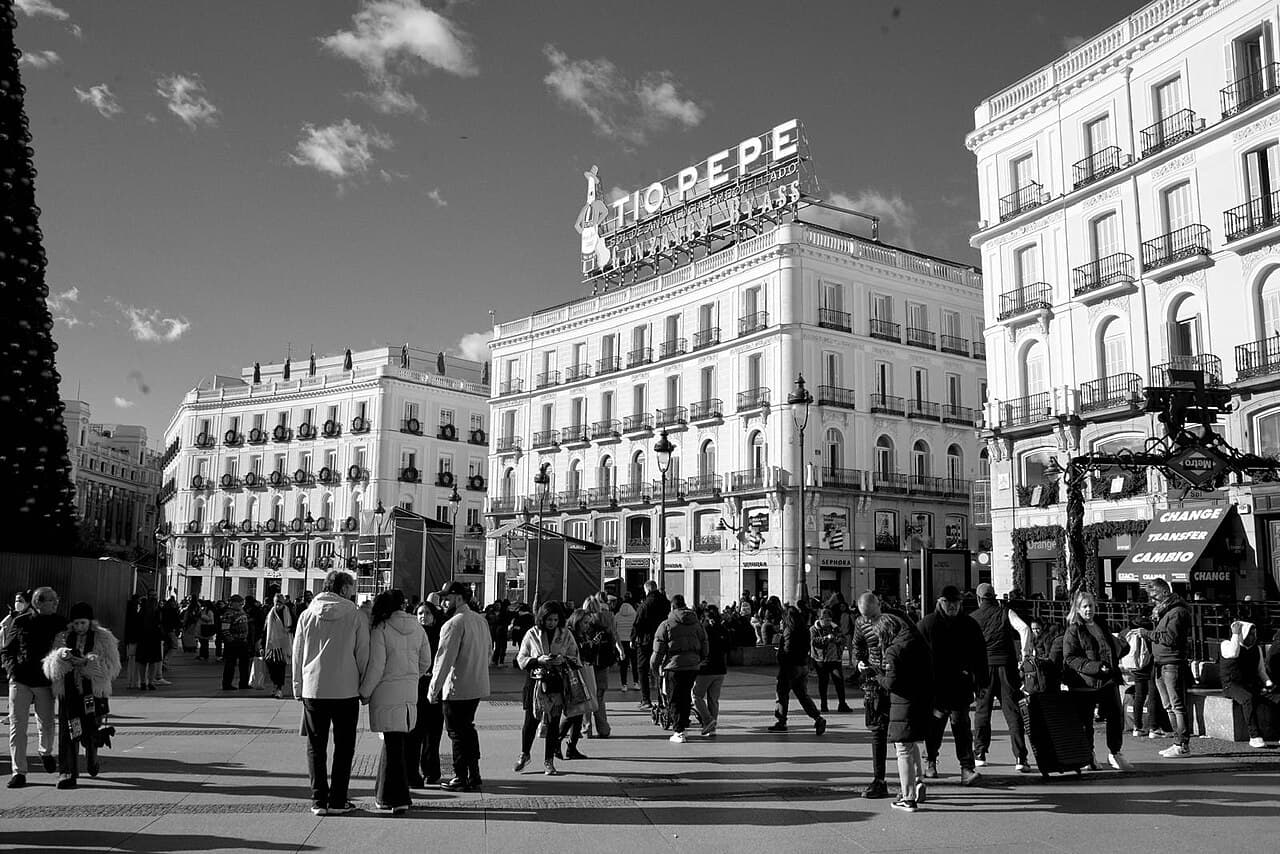
Hyper-central, crowded, tourist-facing, useful, restless. Unmatched central access via Sol Cercanias, metro lines 1, 2, and 3, Gran Via, Sevilla, Callao, Opera, and walkable routes to almost every central neighborhood.
Sol is useful before it is livable. It is Madrid's center of movement: metro, Cercanias trains, shopping, tourism, meeting points, hotel routes, restaurants, and pedestrian flows all converge here. For a first week in Madrid, that can be helpful. For a long lease, it can become exhausting.
The case for Sol is simple. You can move almost anywhere quickly, walk to most central neighborhoods, meet people without explaining where you are, and handle early arrival logistics with minimal planning. If you are staying temporarily, learning the city, or waiting to understand your commute and housing priorities, Sol can work as a landing pad.
Who It’s For
- First arrivals
- Short stays
- Maximum transport access
- People testing Madrid before choosing a real base
Who Should Avoid It
- You need quiet sleep
- You want local daily routine
- You need space
- You dislike tourist crowds
Best Sub-Areas
Highlights
- Sol Cercanias and metro access for fast movement across Madrid
- Walkable to Gran Via, Plaza Mayor, Opera, Chueca, Las Letras, and La Latina
- Useful first-week base while learning neighborhoods
- Maximum restaurant, shopping, and errand density
- Easy meeting point for visitors and new arrivals
Pros and Cons
Pros
- The easiest place in Madrid to orient yourself
- Excellent transport and walkability
- Useful for temporary housing and first arrival weeks
- Almost every central plan is nearby
- Strong convenience if your stay is short and logistics matter most
Cons
- Tourist pressure shapes daily life
- High noise, crowds, and late-night movement
- Weak neighborhood feel compared with nearby areas
- Expensive for small or compromised flats
- Long-term routines often work better one or two neighborhoods away
Compared With Other Neighborhoods
- More central than Chueca or Las Letras, but usually less livable
- More convenient than La Latina, with less neighborhood identity
- More tiring than Chamberi, Retiro, or Arganzuela for ordinary weeks
- Better as a landing pad than Malasana if transport matters more than nightlife identity
Bottom Line
The case against Sol is just as clear. Crowds are constant, many services are visitor-facing, street noise is normal, and the area can feel less like a neighborhood than a transport-and-tourism machine. Some streets are calmer than others, but the broader rhythm is rarely residential. You may be close to everything and still not feel settled.
Flat quality is another issue. Hyper-central listings often charge for location while compromising on space, light, insulation, or building comfort. Short-term rentals and tourist apartments also shape the market. If a listing seems unusually good, check the floor, windows, street, building entrance, and whether the area feels usable after midnight.
Choose Sol if you need maximum access for a short, practical period. For long-term living, most people are better served nearby: Las Letras for culture, Chueca for social life, La Latina for old-Madrid atmosphere, Chamberi for routine, or Arganzuela for value and space.
Location
Rent figures in this guide are editorial planning estimates from its 2026-05-02 edition, not a current market quotation or a guarantee for a particular flat. Compare live listings. Descriptions of atmosphere and safety are editorial judgments, not a statistical crime ranking; inspect the exact street and building.
Spotted an outdated detail? Send the desk a correction.