What this means for you
- Who is affected
- People whose journeys were affected by the June 2026 visit preparations and events.
- What this report covers
- The traffic closures and bus changes described for that dated visit; they are not current route instructions.
- What to do next
- For a journey now, use current Ayuntamiento traffic notices and EMT or CRTM service information rather than the June diversion list.
On this page
Key takeaways
- Pope Leo XIV is in Madrid from Saturday June 6 to Tuesday June 9, with the biggest public pressure around Plaza de Lima on June 6 and Plaza de Cibeles on June 7.
- The Ayuntamiento expects around 1.8 million people across the Lima and Cibeles events, and says mobility effects began with setup works on May 21.
- The biggest road risk is the Castellana-Recoletos-Prado axis, especially around Plaza de Lima, Nuevos Ministerios, Cibeles, Alcalá, Prado, and the Bernabéu.
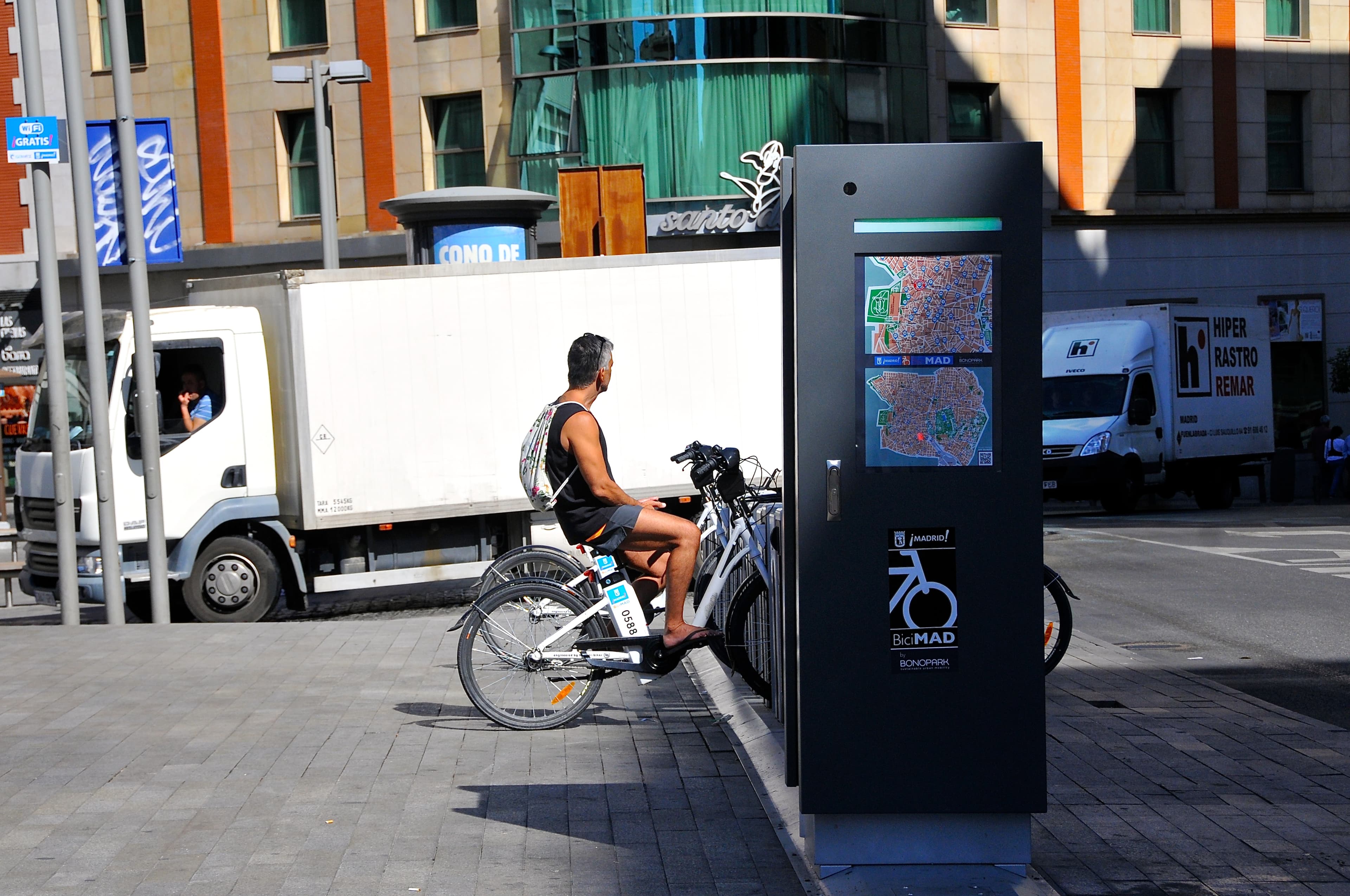
- EMT buses and BiciMAD will be free from June 3 to 9, but many EMT lines around Lima, Cibeles, Movistar Arena, Almudena, Bernabéu, and IFEMA may be diverted or affected.
Pope Leo XIV will be in Madrid from Saturday June 6 to Tuesday June 9, and for most residents the practical question is not theology. It is whether you can get across town without being folded into a crowd-control plan you did not sign up for.
The official programme is now clear. The mobility details are only partly clear, which is exactly why this is worth planning early.
The two biggest public-pressure points are Plaza de Lima on Saturday June 6 and Plaza de Cibeles on Sunday June 7. The Ayuntamiento says the two sites are expected to draw around 1.8 million people in total, and setup works began affecting traffic from May 21. EMT buses and BiciMAD will be free from June 3 to 9, but free does not mean normal. Several major bus corridors will be diverted, slowed, or crowded.
The short version: if you do not have tickets or a reason to be there, avoid the Castellana-Recoletos-Prado spine during the main windows. Madrid is very good at absorbing chaos until suddenly it is not.
The Schedule That Matters
The Pope arrives at Barajas at 10:30 on Saturday June 6, then goes to the Royal Palace for the official welcome, a meeting with the King and Queen, and an address to authorities, civil society, and the diplomatic corps. That already makes the Palacio Real/Opera/Almudena side more sensitive than usual on Saturday morning and early afternoon.
The day then moves west and north. At 18:00, Leo XIV visits the Cáritas CEDIA 24 Horas social project, a centre for people experiencing homelessness. At 20:30, he leads a prayer vigil with young people at Plaza de Lima, next to the Santiago Bernabéu, with a Popemobile route through the area before the event.
Sunday June 7 is the central day. At 10:00, the Pope celebrates Mass at Plaza de Cibeles, followed by the Corpus Christi procession. In the afternoon, he has a private Augustinian meeting at the Nunciature and then a 18:00 event at Movistar Arena with representatives from culture, art, economy, and sport.
Monday June 8 is institutional in the morning and local-church heavy in the evening. At 09:30, he meets the Prime Minister at the Apostolic Nunciature. At 10:30, he addresses members of the Spanish Parliament at the Congress of Deputies. At 18:00, he prays at Almudena Cathedral, then goes to the Santiago Bernabéu for a 19:00 meeting with Madrid's diocesan community.
Tuesday June 9 closes the Madrid leg with a 10:20 volunteer meeting at IFEMA, before the Pope leaves for Barcelona.
What Closes First
The disruptions do not begin on June 6. They have already started.
Madrid City Hall says setup works for the Lima vigil and Cibeles Mass began on May 21, with early works scheduled at night where possible. The affected areas include Plaza de Cánovas del Castillo, Plaza de Cibeles, Plaza de la Independencia, Calle Alcalá between Independencia and Gran Vía, Paseo de Recoletos, Paseo del Prado, Paseo de la Castellana, and Plaza de Lima.
The heavier dates are the ones to mark:
From May 25: road-occupation works intensify around the main sites. This is the week when "it is just one blocked lane" starts becoming "why is my bus no longer where it was yesterday?"
June 3: Plaza de Lima and the central lanes of Paseo de la Castellana around the Bernabéu become the big problem. The Ayuntamiento plan points to a near-total traffic cut in the central lanes around Lima from this date.
June 4: Plaza de Cibeles becomes the big problem. Reporting from the municipal briefing says the plaza will be effectively closed to traffic from this point, with vehicles forced to route around it.
June 6-7: the main crowds arrive. Expect the event zones themselves, not just the official closure points, to expand as streets fill.
If you drive, the official advice is basically: use the M-30 and avoid the centre. That is not elegant, but it is correct. This is not the week to test whether Waze knows a clever little cut-through around Cibeles. Waze will also be suffering.
Roads And Areas To Avoid
For the 99% of residents not attending, the risk map is simple.
Avoid Plaza de Lima, Santiago Bernabéu, Nuevos Ministerios, Raimundo Fernández Villaverde, and Paseo de la Castellana on Saturday evening June 6 and Monday evening June 8.
Avoid Cibeles, Recoletos, Paseo del Prado, Alcalá, Banco de España, Puerta de Alcalá, Plaza de la Independencia, Neptuno, and the Prado/Retiro edge on Sunday morning June 7.
Avoid the Congress of Deputies, Carrera de San Jerónimo, Sol-Sevilla-Cortes-Letras approaches, and nearby taxi/drop-off expectations on Monday morning June 8.
Avoid the Almudena/Palacio Real/Opera area late Monday afternoon and early evening if you are trying to move quickly rather than watch a security operation happen in real time.
For east-west movement, do not assume the obvious central crossing will work. If you must move by car or taxi, use wider outer routes and build in a margin. North-south trips should lean away from the Castellana-Recoletos-Prado axis where possible.
What Happens To Buses
EMT has already published a major incident notice, and the list is long enough to make the point by existing.
On Saturday June 6, the Plaza de Lima vigil may affect lines including 1, 3, 5, 7, 11, 12, 14, 16, 19, 27, 29, 40, 43, 45, 51, 52, C1, C2, 87, 120, 126, 147, 149, 150, night lines including N1, N22, N24, N29, N30, and S10.
On Sunday June 7, the Cibeles Mass and Corpus procession may affect a much larger set, including central routes, circular routes, express services, and the Airport Express. EMT also lists possible effects around the 18:00 Movistar Arena event that day.
On Monday June 8, lines around Almudena and the Bernabéu are again exposed. On Tuesday June 9, IFEMA-area lines may be affected around the volunteer meeting.
EMT buses and BiciMAD will be free from June 3 to 9, and EMT says service will be reinforced on June 6 and 7. Good. Use that. But do not confuse "free" with "direct." A free bus that has been diverted away from your stop is still not your bus.
For BiciMAD, the free window is useful for short trips outside the worst event zones. It is not a magic key through a secured perimeter. If you use it, check both available bikes and free docks before moving, and do not rely on stations beside Lima, Cibeles, the Bernabéu, or the Prado corridor staying easy.
What About Metro?
As of May 24, a full Metro de Madrid crowd-management plan for the visit has not been published in the sources checked. That matters because some early summaries are already treating metro management as if it is fully settled. It is not, at least not publicly.
The practical assumption is still obvious: stations near the event zones will be under pressure. Around Plaza de Lima and the Bernabéu, that means Santiago Bernabéu, Nuevos Ministerios, Cuzco, Concha Espina, and República Argentina may be busier than normal depending on access flows. Around Cibeles, think Banco de España, Retiro, Sevilla, Colón, Sol, Atocha, and Estación del Arte as stations that could absorb displaced crowds or event access.
That does not mean all will close. It means you should not plan a tight connection through them during the peak windows and then act betrayed when everyone else in Madrid also discovers Line 2.
Watch Metro de Madrid and CRTM updates closer to June 6. If specific station closures, access controls, one-way pedestrian flows, or extended hours are announced, those details should override any general advice here.
The Quiet-Barrios Effect
Big Madrid events create two cities at once: the overloaded event spine and the strangely calm places just outside it.
During the main Lima and Cibeles windows, many residents will avoid the centre, many visitors will be concentrated around the official zones, and normal weekend movement will bend around the closures. That means some areas may feel quieter than usual even while the city is technically packed.
If you want dinner, errands, or a low-friction evening that weekend, aim away from the event spine: deeper Chamberí away from Castellana, parts of Arganzuela, Delicias, Legazpi, Usera, Prosperidad, Pacifico, Ibiza away from Retiro access, and neighbourhood streets that do not depend on Recoletos or Castellana to function. This is not a guarantee of silence. Madrid does not do silence. But it is a better bet than pretending Cibeles is just another Sunday morning.
If you are meeting friends, choose a neighbourhood first, then a venue. "Let's meet somewhere central" is how you accidentally end up negotiating around police barriers with seven people and one phone at 4%.
Practical Alternatives
If you live west of the centre and need to get east, or vice versa, plan around the centre rather than through it. The M-30 is the official car answer. For public transport, use metro routes that avoid the event stations where possible, and be willing to add one transfer if it keeps you out of Banco de España, Santiago Bernabéu, or Nuevos Ministerios at peak crowd times.
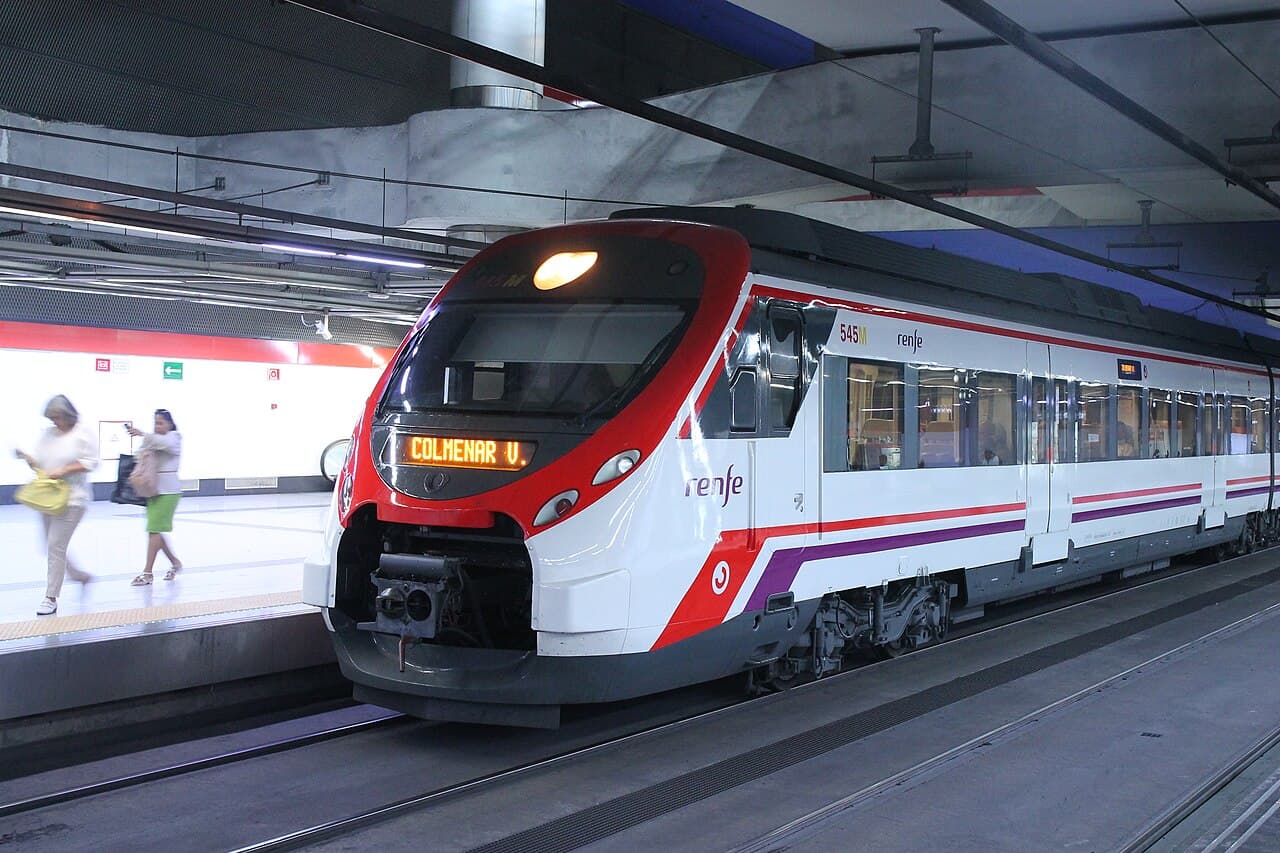
If you are travelling to Atocha, Chamartín, or the airport that weekend, leave early. The Airport Express is listed among the possible affected lines for June 7, and the Castellana/Nuevos Ministerios axis is exposed on the Lima and Bernabéu days. For airport trips, price the metro, Cercanías, taxi, and app-car options separately, but do not assume road vehicles will be faster just because you are paying more.
If you work around Cibeles, Recoletos, Castellana, Lima, the Bernabéu, Sol/Cortes, Almudena, or IFEMA, ask now about telework or flexible hours for June 3-9. The mayor has explicitly asked companies in affected areas to facilitate telework and flexible schedules. This is one of those rare times when "the Pope made me work from home" is a coherent sentence.
If you are hosting guests, warn them before they book a hotel around Cibeles, Prado, Recoletos, Bernabéu, or Plaza de Castilla purely because "it looks central." It will be central. That is the problem.
What To Watch Next
Three things are still worth checking before the visit:
- the final traffic-cut maps for Cibeles and Lima as setup advances
- Metro de Madrid and CRTM crowd-management notices
- event access rules for people without registration or with late registration
The most useful official pages are the esmadrid visit page, the Ayuntamiento mobility page, EMT's incident notice, and the visit website linked from those pages.
The Bottom Line
Pope Leo XIV's visit is not just a religious event. For Madrid residents, it is a city-operations event.
The heaviest disruption will cluster around Plaza de Lima on June 6, Cibeles on June 7, Congress and Almudena/Bernabéu on June 8, and IFEMA on June 9. Road closures start earlier because the city has to build the event before it can host it.
Use public transport, but check it. Avoid the Castellana-Recoletos-Prado axis when the crowds peak. Do not schedule anything delicate near Cibeles on Sunday morning. And if you can work from home during the worst of it, this is the week to enjoy the commute you do not take.
Sources checked on May 24, 2026. Mobility plans may change as security details are finalised; check official city, EMT, Metro/CRTM, and event channels before travel from June 3 onward.
Main tradeoffs
- Public transport is the right answer, but it will not feel normal near the main event zones. Free buses can still be slow, diverted, or full.
- Metro crowd-management details have not been fully published as of May 24, so assume the obvious stations near Lima, Cibeles, Bernabéu, and Sol/Sevilla/Banco de España may be under pressure rather than treating the metro as frictionless.
- The visit may make some central shopping and nightlife areas oddly quieter while event zones are overwhelmed. That can be useful if you choose your neighborhood carefully.
Sources
- Pope Leo XIV's visit to Madrid / esmadrid
- Apostolic Journey of His Holiness Pope Leo XIV to Spain (6-12 June 2026) / Holy See Press Office
- Schedule for Pope's Apostolic Journey to Spain released / Vatican News
- Cortes de tráfico con motivo de los preparativos de la Visita del Papa León XIV a Madrid 2026 / Ayuntamiento de Madrid — Unavailable during the 2026-10-18 access check (HTTP 404); this is an access result, not a factual verdict.
- Visita del papa León XIV / EMT Madrid — Unavailable during the 2026-10-18 access check (HTTP 404); this is an access result, not a factual verdict.
- The Bernabéu will host a meeting on June 8 between Pope Leo XIV and the diocesan community of Madrid / Real Madrid
- Cortes de tráfico a partir del lunes por la visita de León XIV / Cadena SER
- 15 días de cortes de tráfico entre Cibeles y el Bernabéu por la visita del Papa / El País — Unavailable during the 2026-10-18 access check (HTTP 404); this is an access result, not a factual verdict.
- Palacio de Cibeles / Hernan Gonzalez / Unsplash — Unavailable during the 2026-10-18 access check (HTTP 401); this is an access result, not a factual verdict.
Spotted an outdated detail? Send the desk a correction.